
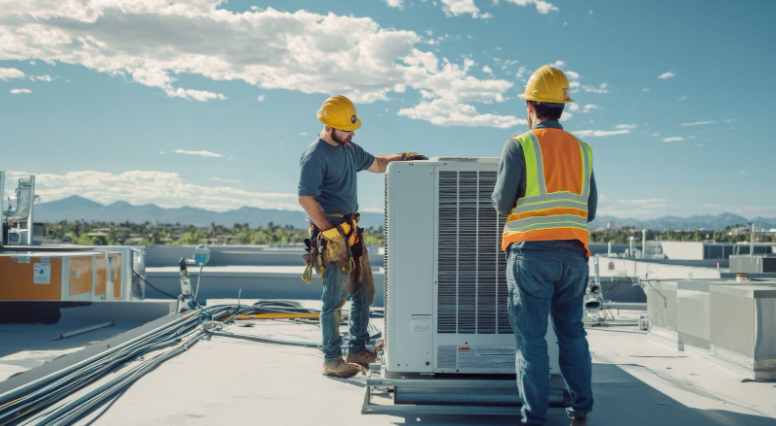
Rising energy costs, stricter building expectations, and long-term operating expenses are putting pressure on property owners to make smarter decisions early in the construction process. One of the most effective ways to protect a new building’s value starts behind the walls and above the ceilings. Investing in a high-efficiency HVAC system during new construction can deliver measurable financial returns while supporting comfort, compliance, and long-term asset performance.
For developers and building owners, HVAC choices made during design and construction often determine how a property performs for decades. High-efficiency systems are no longer considered upgrades. They are foundational components of high-value commercial buildings.
The Link Between HVAC Efficiency and Property Value
HVAC systems represent one of the largest capital investments in any commercial building. They also account for a significant portion of annual operating costs. Studies consistently show that buildings with modern, energy-efficient mechanical systems command higher lease rates, attract stronger tenants, and retain value more effectively over time.
Buyers and tenants increasingly evaluate buildings based on operational efficiency. Energy performance metrics now influence purchasing decisions, financing terms, and insurance considerations. A building with an outdated or inefficient HVAC system often signals future capital expenses. A high-efficiency system signals foresight, reduced risk, and long-term cost stability.
In new construction, the opportunity to design efficiency into the system from day one eliminates costly retrofits later and creates immediate value.
Lower Operating Costs Create Immediate Financial Impact
One of the clearest benefits of high-efficiency HVAC systems is reduced energy consumption. Advanced equipment uses less power to deliver consistent heating, cooling, and ventilation. Variable speed drives, energy recovery systems, high-efficiency chillers, and modern control strategies reduce waste and improve performance across the building.
Lower utility bills translate directly into stronger net operating income. For income-producing properties, even modest reductions in annual energy costs can significantly impact valuation. Appraisers and investors pay close attention to operating expenses. Buildings that demonstrate predictable and reduced energy usage often receive more favorable valuations.
Over the lifespan of a building, energy savings can exceed the initial cost difference between standard and high-efficiency systems.
Improved Tenant Comfort Drives Retention
Comfort plays a major role in tenant satisfaction. Temperature consistency, indoor air quality, and noise levels all affect how occupants experience a space. High-efficiency HVAC systems are designed to deliver more precise control and better airflow management.
Modern systems reduce hot and cold spots and respond more effectively to changing occupancy loads. Improved filtration and ventilation also contribute to healthier indoor environments. In office, healthcare, residential, and mixed-use buildings, these factors influence lease renewals and tenant loyalty.
Tenants are more likely to remain in buildings that support comfort and productivity. Reduced turnover lowers vacancy rates and minimizes the costs associated with tenant improvements and downtime.
Compliance and Future-Proofing New Construction
Energy codes and performance standards continue to evolve. New construction projects face increasing regulatory scrutiny at the local, state, and federal levels. High-efficiency HVAC systems help buildings meet current requirements while preparing for future standards.
Designing systems that exceed baseline efficiency targets provides a buffer against regulatory changes. This reduces the likelihood of mandatory upgrades or compliance-driven retrofits later in the building’s lifecycle.
In markets like New York City, where energy benchmarking and emissions regulations affect long-term ownership costs, efficient HVAC design has become essential to risk management.
Enhanced Marketability and Competitive Advantage
Buildings with high-efficiency HVAC systems are easier to market. Sustainability, energy performance, and operating efficiency are now key differentiators in competitive real estate markets.
Developers who invest in efficient mechanical systems position their properties as forward-thinking and well-managed. This appeal extends to institutional investors, corporate tenants, and mission-driven organizations that prioritize sustainability goals.
High-efficiency systems also support green building certifications and energy performance ratings, which further enhance a property’s visibility and credibility.
Reduced Maintenance and Longer System Lifespan
Efficiency improvements often go hand in hand with better system design and smarter controls. Properly designed high-efficiency systems operate under less strain and experience fewer extreme load conditions. This contributes to reduced wear on components and longer equipment life.
Predictive maintenance capabilities and advanced monitoring allow building operators to address issues before they escalate. Fewer emergency repairs and more predictable maintenance schedules reduce long-term costs and operational disruptions.
For owners planning to hold assets long-term, durability and serviceability play a critical role in total cost of ownership.
Design Integration Matters
The value of a high-efficiency HVAC system depends heavily on proper design and installation. Equipment selection must align with building usage, occupancy patterns, and architectural constraints. Load calculations, zoning strategies, and control integration all influence real-world performance.
In new construction, collaboration between mechanical contractors, engineers, and project teams ensures that systems are sized correctly and optimized for the building’s needs. Poorly designed systems can underperform regardless of equipment efficiency ratings.
Early coordination allows HVAC systems to integrate seamlessly with electrical, structural, and architectural elements, improving both performance and aesthetics.
Long-Term Return on Investment
While high-efficiency HVAC systems may carry higher upfront costs, the long-term financial benefits often outweigh the initial investment. Energy savings, reduced maintenance, higher tenant retention, and stronger asset valuation contribute to a compelling return.
For developers, these benefits support stronger exit values. For owner-operators, they support predictable operating budgets and asset stability. In both cases, efficiency decisions made during construction shape financial outcomes for years to come.
Building Value Through Smart Mechanical Planning
High-efficiency HVAC systems play a central role in shaping the long-term success of new construction projects. They influence operating costs, tenant experience, regulatory compliance, and overall asset performance. In today’s real estate environment, mechanical efficiency is closely tied to financial resilience.
Awareness of these benefits allows owners and developers to make informed decisions early in the construction process. Strategic HVAC planning creates buildings that perform better, cost less to operate, and retain value in evolving markets.
At Henick-Lane, our teams work closely with developers, owners, and design professionals to deliver high-efficiency HVAC solutions tailored to new construction projects across New York City and the surrounding region. With decades of experience in complex commercial environments, we understand how mechanical systems contribute to long-term building value and operational success.